OET Medicine
OET Medicine

The OET (Occupational English Test) is an English-language exam designed specifically for healthcare professionals. It tests the English you must use safely and effectively in real clinical settings such as history taking, explaining diagnoses, and writing referral letters.
What is OET?
OET assesses your medical English communication skills, not general English like IELTS. It is accepted by medical councils, nursing boards, and regulatory bodies in many countries including Canada and the U.S. (UK, Australia, New Zealand, Ireland, Dubai, etc.).
Who should choose OET?
It is commonly required for:
Doctors
Nurses
Dentists
Physiotherapists
Pharmacists
Radiographers
Occupational therapists
Other health professionals
Exam Structure (4 Subtests)
Listening (≈ 45 minutes)
Purpose: Tests your understanding of patient conversations and lectures.
Parts:
Part A – Consultation notes completion
Part B – Workplace conversations (MCQs)
Part C – Medical talks and interviews (MCQs)
Reading (≈ 60 minutes)
Parts:
Part A (15 min): Fast reading of medical texts (matching, gap-fill)
Part B: Workplace documents (policies, guidelines)
Part C: Long medical articles with comprehension questions
Writing (≈ 45 minutes)
You write one clinical document, such as:
Referral letter
Discharge letter
Transfer letter
Advice letter
You are given case notes and must select what is relevant, rewrite it clearly and appropriately, and organize it properly.
Speaking (≈ 20 minutes)
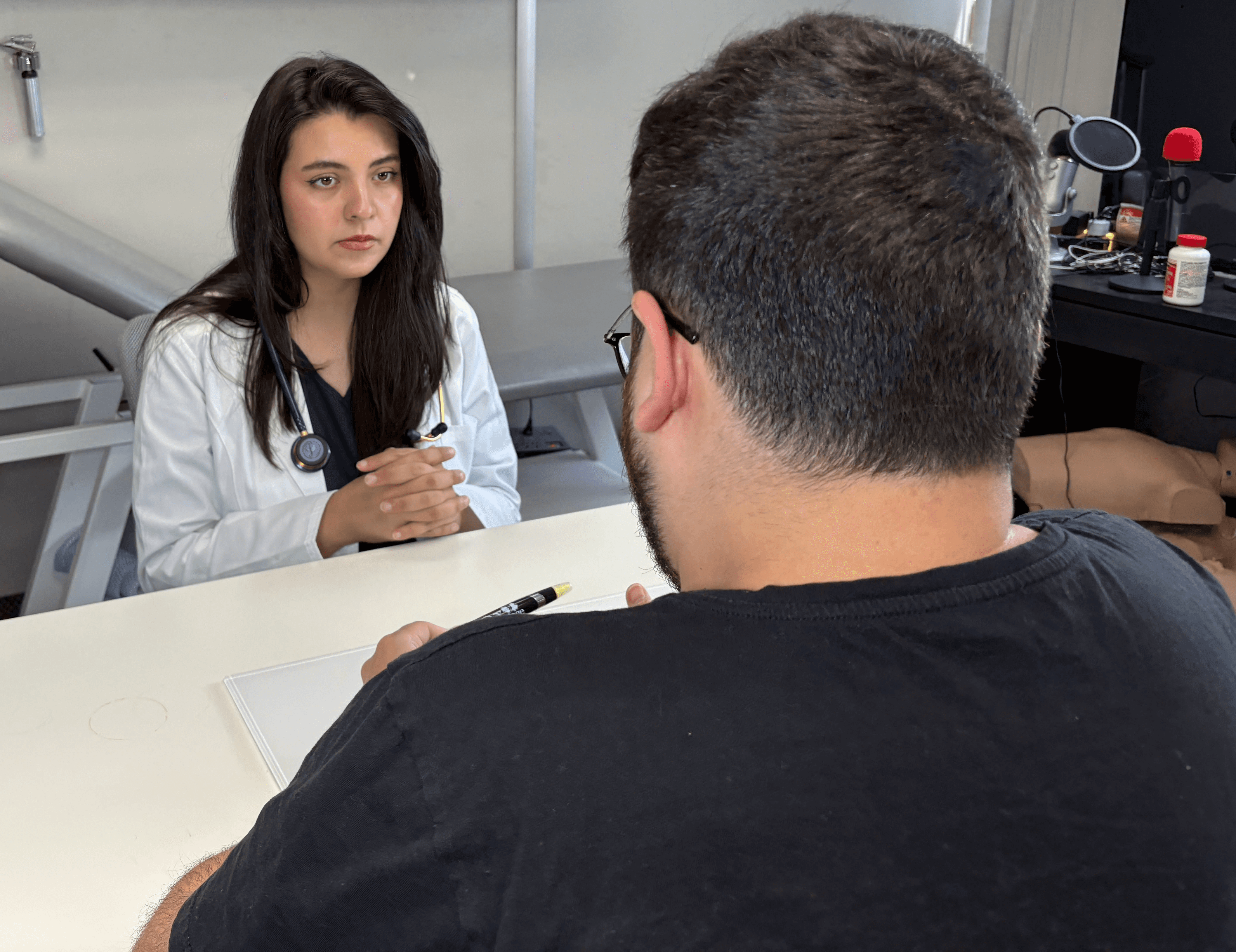
You perform two clinical role-plays with an examiner acting as a patient or relative.
Examples:
Breaking bad news
Taking history
Counselling
Explaining procedures
Handling concerns
Scoring System
Scores are in grades:
Grade | Score | Meaning |
A | 450+ | Excellent |
B | 350–440 | Pass (most medical councils require this) |
C+ | 300–340 | Borderline |
C | 200–290 | Weak |
D | 100–190 | Fail |
Doctors usually need at least a grade of B in all four components.
Exam Frequency & Result Time
Available almost every month
Our Preparation Strategy
Our program focuses on real clinical communication, structured writing, listening accuracy, and role-play speaking — exactly as tested in the OET exam.
Course Details
Course Name: OET Preparation Course
Duration: 2 Months
Schedule: 2 Classes per Week
Format: Live Interactive Sessions
Entry Model: Rolling Enrollment (Join Anytime – No Fixed Start Date)
Focus areas:
Medical letter structure (Writing)
Listening Part A note-taking
Polite, empathetic language (Speaking)
Skimming/scanning techniques (Reading)
Key Highlights
• Profession-specific English training
• OET-style role plays and letter writing
• Personalized feedback on writing & speaking
• Small group interactive coaching
• Clinical scenarios & communication skills
• Suitable for both first-time and repeat candidates
Limited seats available.
The OET (Occupational English Test) is an English-language exam designed specifically for healthcare professionals. It tests the English you must use safely and effectively in real clinical settings such as history taking, explaining diagnoses, and writing referral letters.
What is OET?
OET assesses your medical English communication skills, not general English like IELTS. It is accepted by medical councils, nursing boards, and regulatory bodies in many countries including Canada and the U.S. (UK, Australia, New Zealand, Ireland, Dubai, etc.).
Who should choose OET?
It is commonly required for:
Doctors
Nurses
Dentists
Physiotherapists
Pharmacists
Radiographers
Occupational therapists
Other health professionals
Exam Structure (4 Subtests)
Listening (≈ 45 minutes)
Purpose: Tests your understanding of patient conversations and lectures.
Parts:
Part A – Consultation notes completion
Part B – Workplace conversations (MCQs)
Part C – Medical talks and interviews (MCQs)
Reading (≈ 60 minutes)
Parts:
Part A (15 min): Fast reading of medical texts (matching, gap-fill)
Part B: Workplace documents (policies, guidelines)
Part C: Long medical articles with comprehension questions
Writing (≈ 45 minutes)
You write one clinical document, such as:
Referral letter
Discharge letter
Transfer letter
Advice letter
You are given case notes and must select what is relevant, rewrite it clearly and appropriately, and organize it properly.
Speaking (≈ 20 minutes)
You perform two clinical role-plays with an examiner acting as a patient or relative.
Examples:
Breaking bad news
Taking history
Counselling
Explaining procedures
Handling concerns
Scoring System
Scores are in grades:
Grade | Score | Meaning |
A | 450+ | Excellent |
B | 350–440 | Pass (most medical councils require this) |
C+ | 300–340 | Borderline |
C | 200–290 | Weak |
D | 100–190 | Fail |
Doctors usually need at least a grade of B in all four components.
Exam Frequency & Result Time
Available almost every month
Our Preparation Strategy
Our program focuses on real clinical communication, structured writing, listening accuracy, and role-play speaking — exactly as tested in the OET exam.
Course Details
Course Name: OET Preparation Course
Duration: 2 Months
Schedule: 2 Classes per Week
Format: Live Interactive Sessions
Entry Model: Rolling Enrollment (Join Anytime – No Fixed Start Date)
Focus areas:
Medical letter structure (Writing)
Listening Part A note-taking
Polite, empathetic language (Speaking)
Skimming/scanning techniques (Reading)
Key Highlights
• Profession-specific English training
• OET-style role plays and letter writing
• Personalized feedback on writing & speaking
• Small group interactive coaching
• Clinical scenarios & communication skills
• Suitable for both first-time and repeat candidates